

Welcome to the Gamani Corea Foundation
Gamani Corea Foundation (GCF) was set up by the late Dr Gamani Corea on February 10, 2000, as a foundation to take further his passion for development globally, with particular emphasis on Sri Lanka. The GCF is an autonomous non-profit institute that aims to promote development-related economic research, while being open to research from other social sciences, especially from a multi-disciplinary perspective.
Its mission is to contribute to the socio-economic development of Sri Lanka and other low-income and middle-income countries through informed, independent and high-quality research. GCF perceives research as being more than a mere academic exercise; it is primarily a catalyst for the tangible socio-economic transformation of countries and societies.
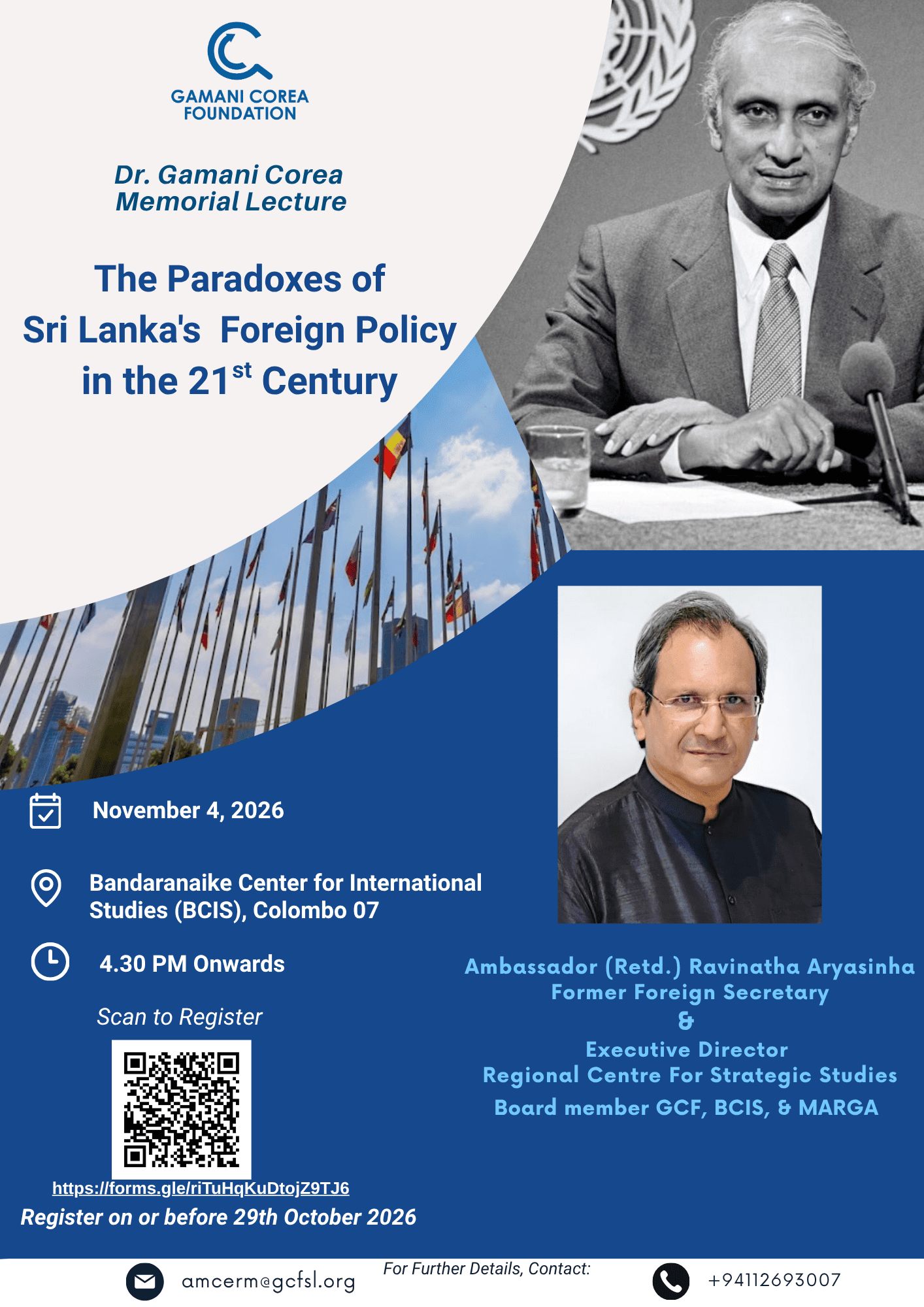
Upcoming Events
What we do


Latest Publications
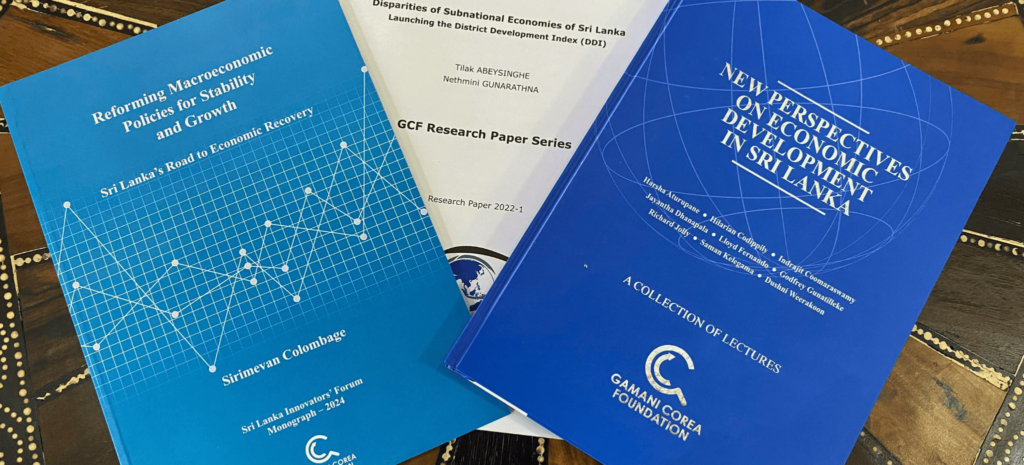
GCF Research Papers
January 2026
Working Papers
Technology, Research, and Innovation: Key Drivers of Economic Growth
Ranil D. Guneratne
August 21, 2025
Collaborations

News and Events
GCF–SLEA Seminar Series: Food Inflation, Food Security and Poverty in Sri Lanka
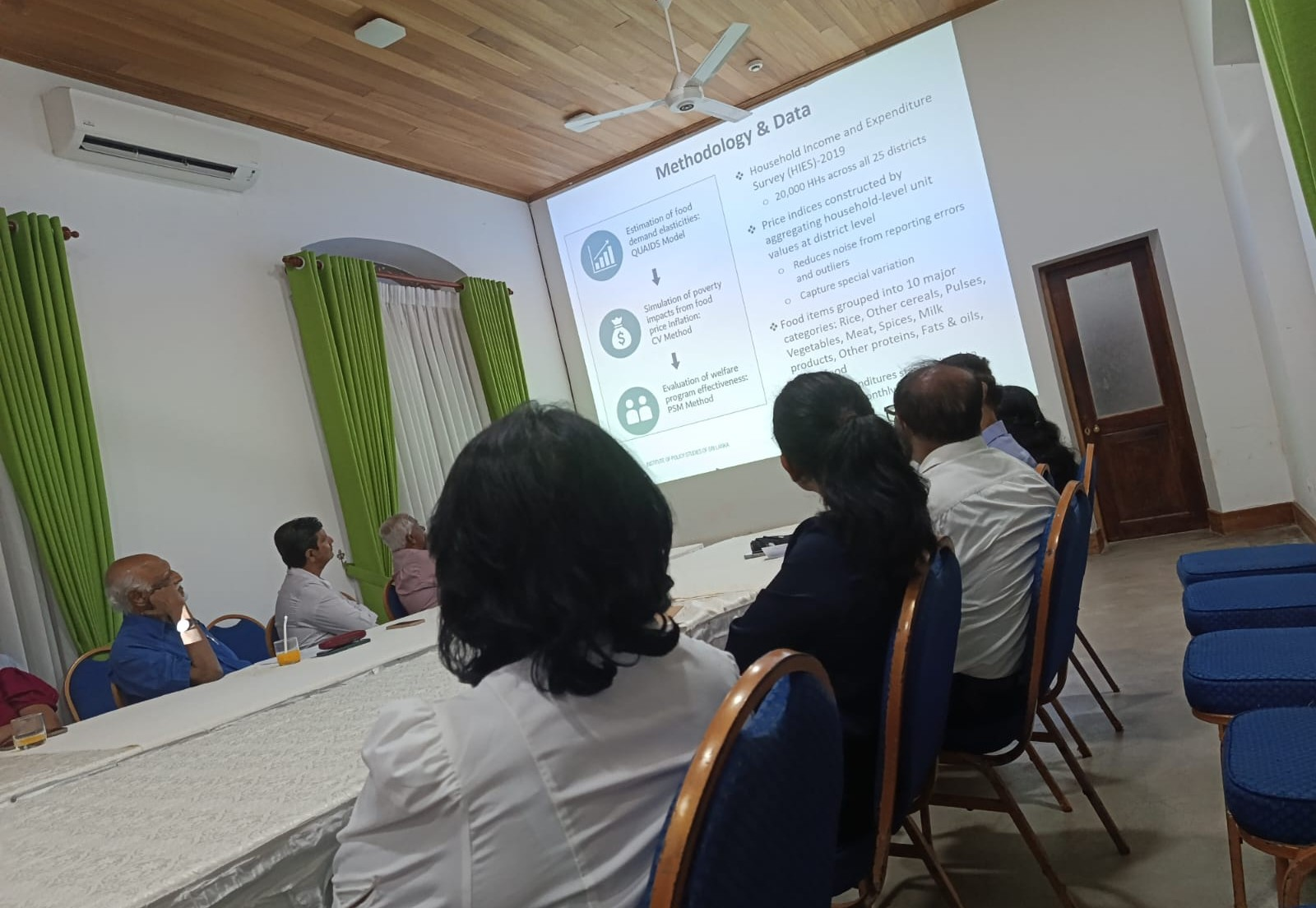
The sixth seminar of the GCF–SLEA Seminar Series, titled “Interlinkages between Food Price Inflation, Food Security, and Poverty in Sri Lanka: An Empirical Analysis,” was held on 15 October 2026 at the Gamani Corea Foundation (GCF) headquarters. The research paper, which is an outcome of the GCF Research Grants – Round 1, was presented by Dr. Manoj Thibbotuwawa, Research Fellow at the Institute of Policy Studies of Sri Lanka (IPS). The seminar examined how rising food prices affect household consumption, welfare, and poverty, and assessed the effectiveness of the Samurdhi programme in protecting vulnerable households. The discussion highlighted the need for inflation-responsive social protection, improved targeting, and policies to safeguard access to nutritious food.
Fifth GCF–SLEA Seminar Examines Political Patronage and Economic Disparities
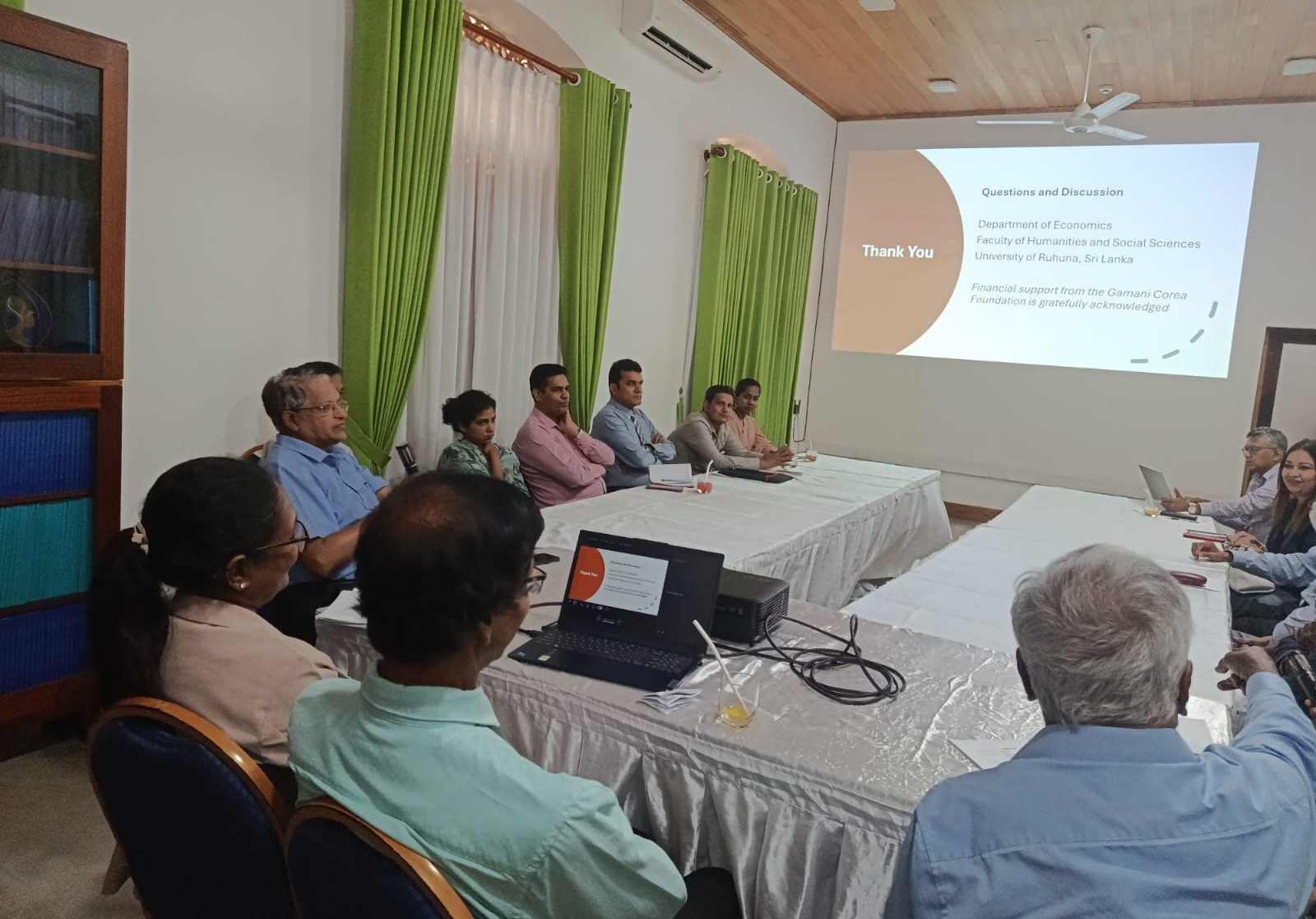
The Gamani Corea Foundation (GCF) and the Sri Lanka Economic Association (SLEA) held the fifth seminar in their joint research seminar series on 20 August 2026 at Horton Lodge, Colombo 07. Dr. B. M. Sumanaratne and Ms. Anuradha Gamage, Senior Lecturers at the University of Ruhuna, presented findings from a GCF-supported study on the influence of political patronage and clientelism on resource allocation, public spending, and economic disparities across Sri Lanka. The study surveyed 390 members of the public and 360 government officers across 15 districts. Among public respondents, 69.5% believed political patronage worsens economic disparities, while 60.6% of government officers reported observing projects prioritized for political gain. The researchers highlighted the importance of transparent public spending, merit-based recruitment, and need-based resource allocation. Emeritus Professor Sirimevan Colombage, President of SLEA and Honorary Deputy Chairperson of GCF, delivered the opening remarks. Dr. Harsha Aturupane, Honorary Chairperson of GCF, moderated the discussion.
SLEA and GCF Host Book Launch on Sri Lanka's Debt Crisis and Economic Reform
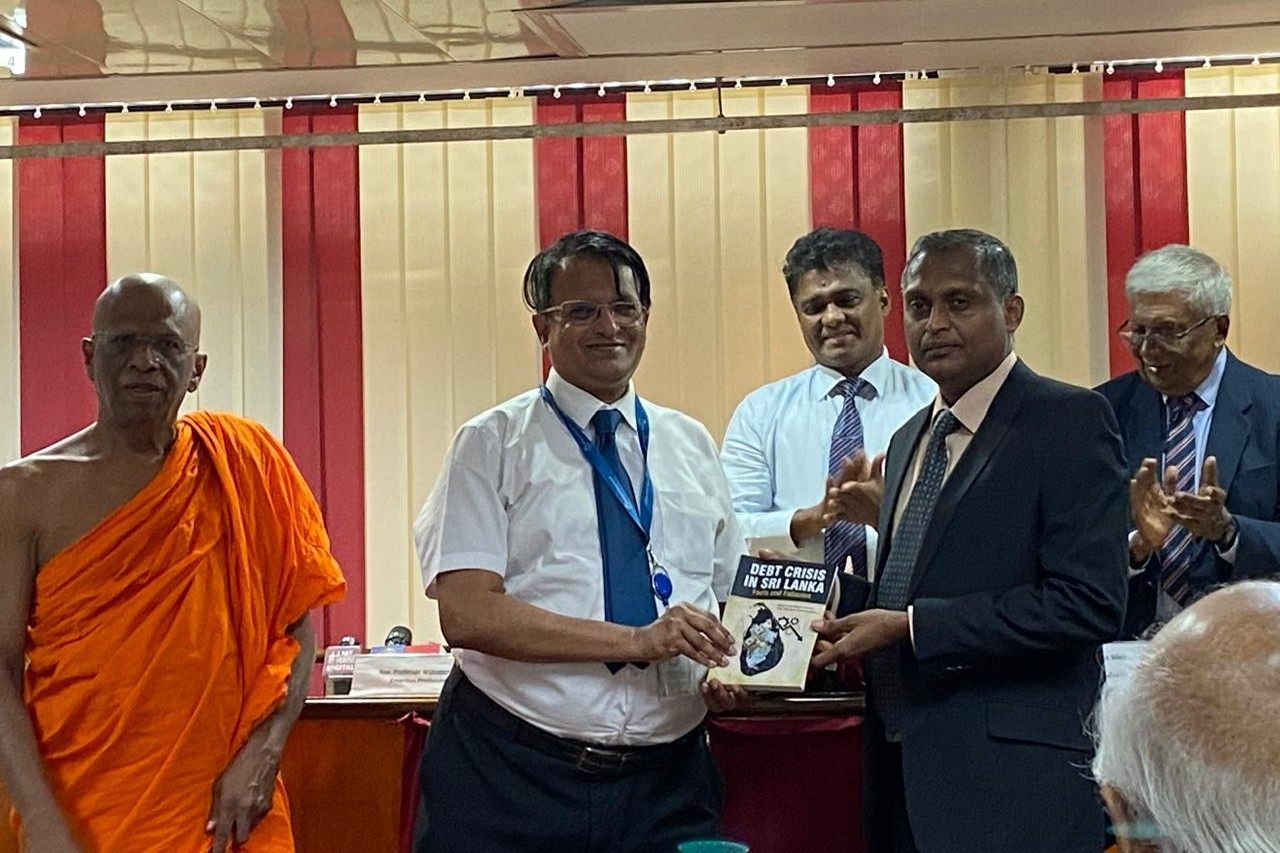
The Sri Lanka Economic Association (SLEA), in collaboration with the Gamani Corea Foundation (GCF), organized a book launch ceremony on 30 July 2026 at the Organization of Professional Associations (OPA), Colombo. The event marked the launch of two publications: Debt Crisis in Sri Lanka: Facts and Fallacies, co-authored by Rev. Prof. Wijitapure Wimalaratana, Professor of Economics at the University of Colombo, and Dr. Mahinda Pushpakumara, Senior Lecturer at the University of Colombo, and 64 Wounds that Crippled the Sri Lankan Economy by Rev. Prof. Wijitapure Wimalaratana. The Sinhala translation of 64 Wounds that Crippled the Sri Lankan Economy was also launched at the ceremony. The event featured a discussion on the key themes explored in the publications, focusing on the causes of Sri Lanka’s economic crisis and the reforms needed to achieve sustainable economic growth. The speakers emphasized the importance of transforming Sri Lanka into an export-oriented economy supported by the rule of law, good governance, and a dynamic private sector. The discussion also highlighted the need for sound economic policies and institutional reforms to strengthen the country’s long-term economic resilience. The programme concluded with an interactive question-and-answer session moderated by Dr. Harsha Aturupane, providing participants with an opportunity to engage with the authors on the issues discussed in the books.
